The Experience

Experience the Work

Formation experiences for leaders, teams, and organizations.

The Formed Leader uses encounters with music, visual art, film, story, poetry, architecture, nature, and contemplative practice to cultivate the human capacities that shape wise leadership.

Experiences can stand alone as focused signature sessions, integrate into existing leadership development programs, or expand into half-day, full-day, retreat, and multi-session engagements. Each is adapted to the context, goals, and questions of the people in the room.

Formation Experiences

Experience the Work

What does a Formation Experience actually look like?

Each experience begins with an encounter—a piece of music, a work of art, a film, a building, a poem, a story—and uses reflection, dialogue, embodied awareness, and intentional practice to cultivate a distinctly human capacity for leadership.

The art is not an illustration of the lesson. It is the teacher.

Here are eight examples from The Formed Leader's growing Formation Experience library.

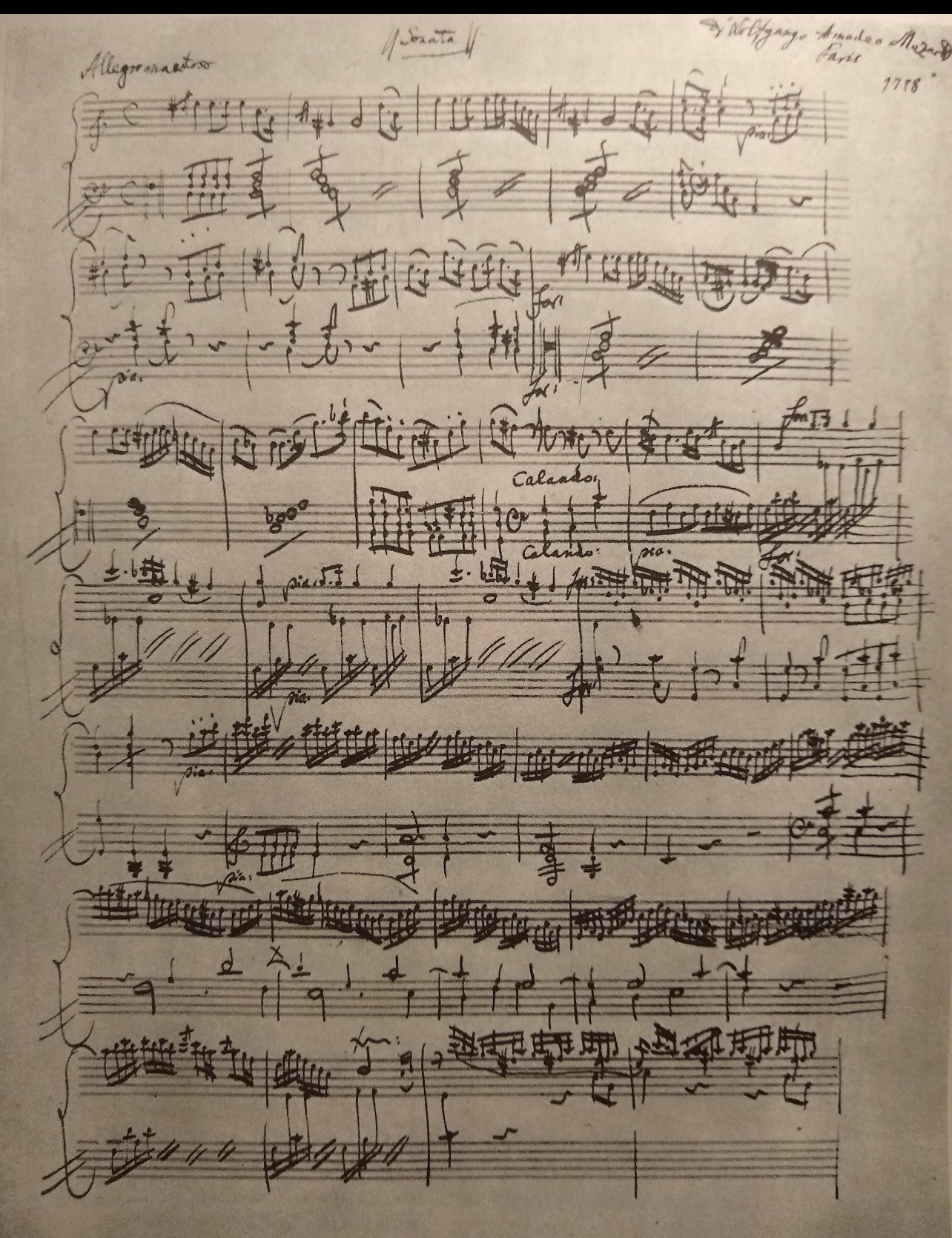
A handwritten Mozart manuscript page of a keyboard sonata, dense with notes and markings

Music

The Pause

Wolfgang Amadeus Mozart · Fantasia in D Minor, K. 397

Human Capacities

Self-awareness · Emotional regulation · Presence · Wise judgment

Mozart's unfinished fantasia moves through uncertainty, grief, urgency, and tension before arriving at an unresolved pause. Participants listen, notice what the music evokes in the body, and connect that experience to a real unfinished moment in their own leadership.

Leadership Connection

What happens in the space between stimulus and response? Participants explore how to interrupt reactivity, remain present under pressure, and choose a response aligned with their values rather than fear, ego, or impulse.

Practice

The Pause — notice emotion, breath, and body before choosing a response.

A weathered porch with green shutters and two empty wooden rocking chairs

Music

Hello in There

John Prine · “Hello in There”

Human Capacities

Empathy · Compassion · Presence · Connection · Perspective-taking

Through John Prine's portrait of an aging couple whose lives have become almost invisible to those around them, participants practice seeing the humanity we so easily miss in another person. Listening, silence, reflection, and dialogue turn attention toward the people who can disappear into the background of our organizations and everyday lives.

Leadership Connection

Who are we failing to see? Leaders who notice and acknowledge people who go unseen create greater trust, belonging, psychological safety, and human connection.

Practice

Hello — intentionally notice, greet, and listen to someone who might otherwise remain unseen.

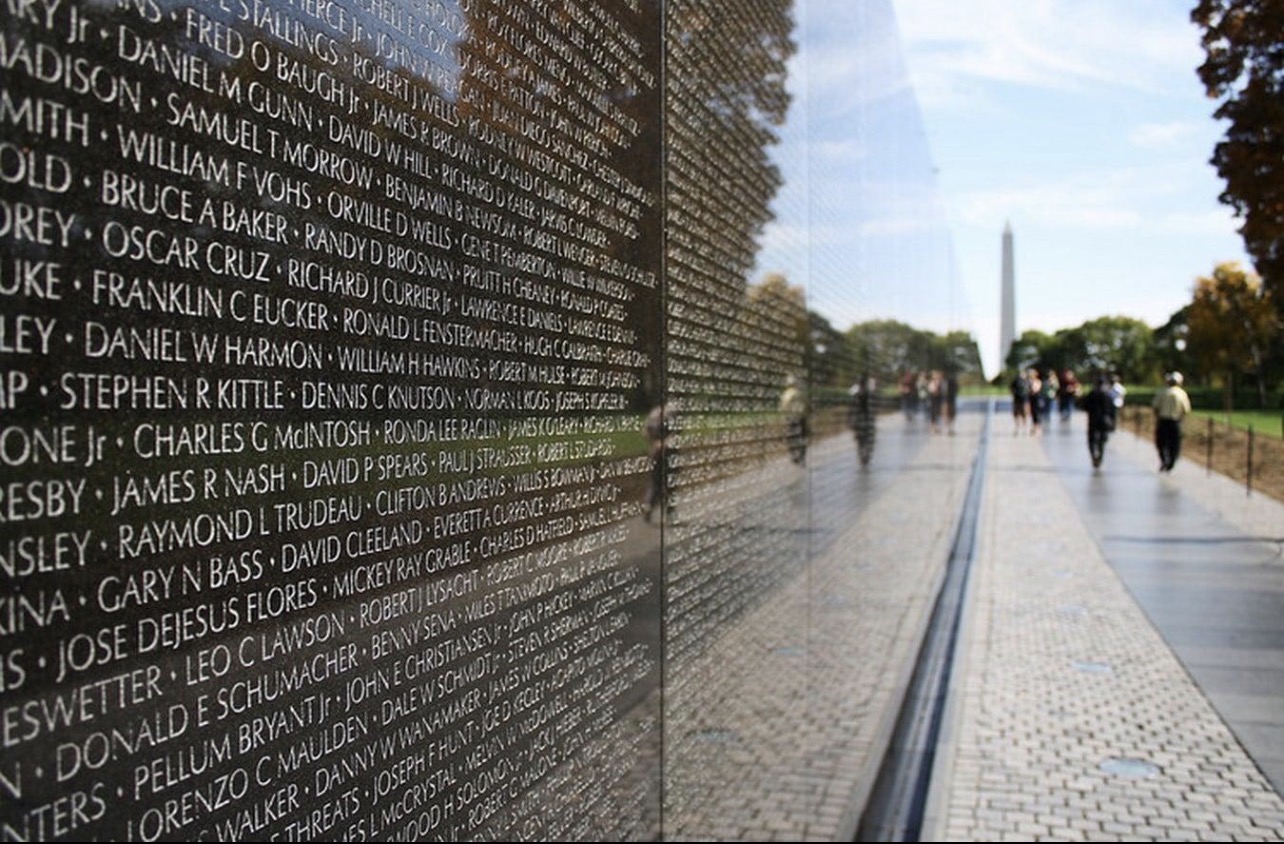
Names engraved on the reflective black granite of the Vietnam Veterans Memorial, with the Washington Monument in the distance

Architecture

What We Owe the Names We Carry

Maya Lin · Vietnam Veterans Memorial

Human Capacities

Humility · Remembrance · Compassion · Perspective

Participants encounter Maya Lin's Vietnam Veterans Memorial: its descent into the earth, its chronological names, and its reflective granite that places the living among the dead. From there, the experience asks what—and whom—leaders are responsible for carrying, honoring, and remembering.

Leadership Connection

Leadership is not only about vision and the future. It also carries an obligation to the past. Participants consider how leaders honor loss, sacrifice, failure, and contributions that might otherwise disappear from organizational memory.

Practice

Naming — identify one person or contribution that has gone unacknowledged and speak it aloud.

A vintage microphone in soft light against a dark background

Film

The Courage to Be Heard

The King's Speech

Human Capacities

Courage · Authenticity · Vulnerability · Voice

Through selected scenes from The King's Speech, participants encounter a leader struggling not simply to speak well, but to speak at all. Breath, embodied awareness, reflection, and dialogue open questions about fear, imperfection, vulnerability, and what it means to find one's own voice.

Leadership Connection

Executive presence isn't flawless performance. Participants explore what becomes possible when leaders stop hiding imperfection and risk saying what is true and necessary in their own voice.

Practice

The Address — say one true, necessary thing aloud without smoothing it into performance.

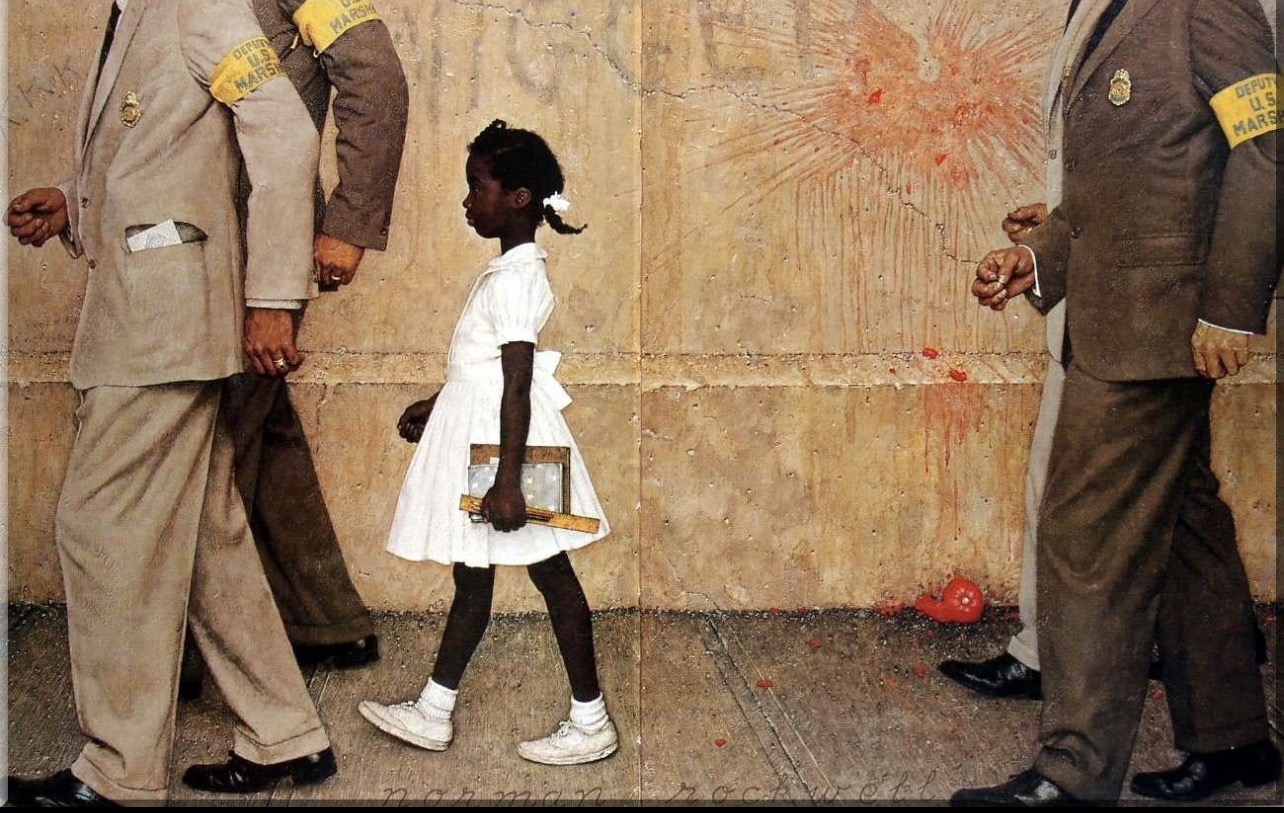
Norman Rockwell's painting of a young Black girl in a white dress walking to school escorted by four U.S. marshals

Visual Art

The Problem We All Live With

Norman Rockwell · The Problem We All Live With

Human Capacities

Moral courage · Discernment · Conviction · Inclusive leadership

Participants first encounter Rockwell's painting without explanation—looking closely at what they notice, what they avoid, and what the image evokes before learning its historical context. Reflection and dialogue then turn toward the cost of walking toward what is right when the surrounding culture has not yet caught up.

Leadership Connection

Inclusion becomes meaningful when conviction becomes visible action. Participants consider whom their leadership protects, whose experience remains outside their field of vision, and where their own silence or action communicates what they truly value.

Practice

Walking Beside — identify someone walking a difficult road and take one concrete, visible action to walk beside them.

Promotional image for the film Margin Call showing the cast in dark suits

Film

The Cost of Compliance

Margin Call

Human Capacities

Moral discernment · Integrity · Courage · Agency under pressure

Through Margin Call, participants enter a world in which people recognize that something is wrong, voice their objections—and may still comply. Reflection and dialogue examine the forces that make compromise feel reasonable: loyalty, hierarchy, fear, ambition, financial reward, belonging, and responsibility for others.

Leadership Connection

Moral clarity does not guarantee moral action. Participants examine their own vulnerability to rationalization and consider what agency remains when organizational pressure conflicts with personal values.

Practice

The Line — name a value you will not allow organizational pressure to negotiate away, recognize the rationalizations most likely to weaken it, and consider what you will do when objection alone isn't enough.

Gaudí's Sagrada Família rising above the rooftops of Barcelona in warm evening light

Architecture

Building What You Will Not Finish

Antoni Gaudí · Sagrada Família

Human Capacities

Patience · Legacy thinking · Vision beyond self

Participants encounter a building begun in 1882 and carried forward across generations. Through images, history, reflection, and dialogue, the unfinished Sagrada Família becomes an invitation to consider what it means to invest in work whose completion—or reward—we may never personally see.

Leadership Connection

Some of a leader's most consequential work will outlast their tenure. Participants explore long-horizon thinking, succession, stewardship, mentoring, and the humility required to build toward a future for which someone else may receive the credit.

Practice

Legacy — name something you are building that you may not finish or receive credit for, and choose how you will invest in it anyway.

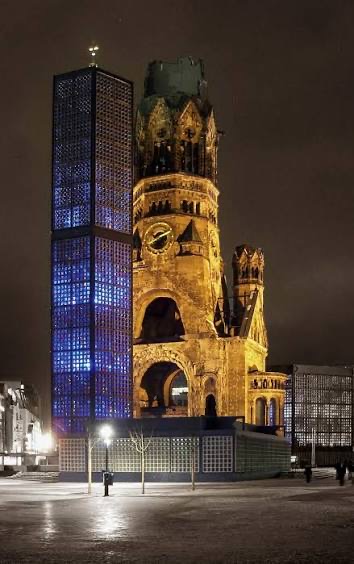
Berlin's Kaiser Wilhelm Memorial Church at night: the ruined tower lit gold beside the modern blue-glass bell tower

Architecture · History · Music · Poetry

The Ruin and the Light

Kaiser Wilhelm Memorial Church

Human Capacities

Resilience · Reconciliation · Adaptability · Discernment

Participants encounter Berlin's Kaiser Wilhelm Memorial Church—a place where destruction was neither erased nor allowed to have the final word. The ruined tower remains beside the modern church, holding memory and possibility together. Architecture, history, music, poetry, personal reflection, and dialogue invite participants to consider what should be restored, what must be released, and what can be transformed.

Leadership Connection

Resilience is not simply returning to what was. Leaders are often called to recover and adjust—to discern what should be carried forward after disruption and what must change. Reconciliation asks a related question: how do we hold what has happened without allowing it to determine everything that comes next?

Practice

Hold On / Let Go — identify what a difficult season asks you to preserve, what it asks you to release, and what new possibility might emerge between them.

A Growing Library of Formation Experiences

These are examples, not a fixed curriculum.

The Formed Leader draws from an expanding interdisciplinary library organized around Story, Beauty, Nature, Contemplation, Relationship, Service, and Embodied Practice.

Experiences may draw from music, visual art, literature, poetry, film, architecture, biography, story, contemplative practice, nature, meaningful dialogue, service, and other forms of human encounter.

Experiences can be selected and shaped around the particular needs of an organization, team, or leadership program. An experience may center on a single work, or several forms may be woven together—as in The Ruin and the Light, where architecture, history, music, poetry, reflection, and dialogue become one integrated encounter.

The medium changes. The method remains.

EncounterNoticeReflectIntegrateBecome

The aim is not simply to understand a leadership idea, but to encounter it, examine it within ourselves, practice it, and begin to embody it in how we live and lead.

If who we are is how we lead, then who are we becoming? The Formed Leader — Human Formation for Leadership, in pursuit of wisdom.

What it is

A Formed Leader experience is a carefully designed encounter that creates space for attention, reflection, dialogue, and intentional practice.

Participants may encounter a work of music, visual art, film, story, poetry, architecture, nature, or another source of beauty and meaning—not simply to analyze it, but to notice what it awakens and reveals.

Through guided reflection and facilitated dialogue, the experience becomes material for examining how we perceive, respond, decide, relate, and lead.

It is not a lecture or another competency model. It is the practice of formation: developing the human being who must ultimately put knowledge, skill, and leadership capacity into practice.

The premise is simple. Leadership is ultimately expressed through human beings. If who we are is how we lead, then leadership development benefits from intentionally developing the human being alongside leadership capacities. Beauty is the doorway; attention is the method; wisdom is the aim.

Experiences are designed and facilitated by Amy Shortt, drawing on more than twenty-five years integrating professional musicianship and conducting, leadership practice, and guided reflection. Each experience is adapted to the organization's context and the questions its leaders are actually carrying.

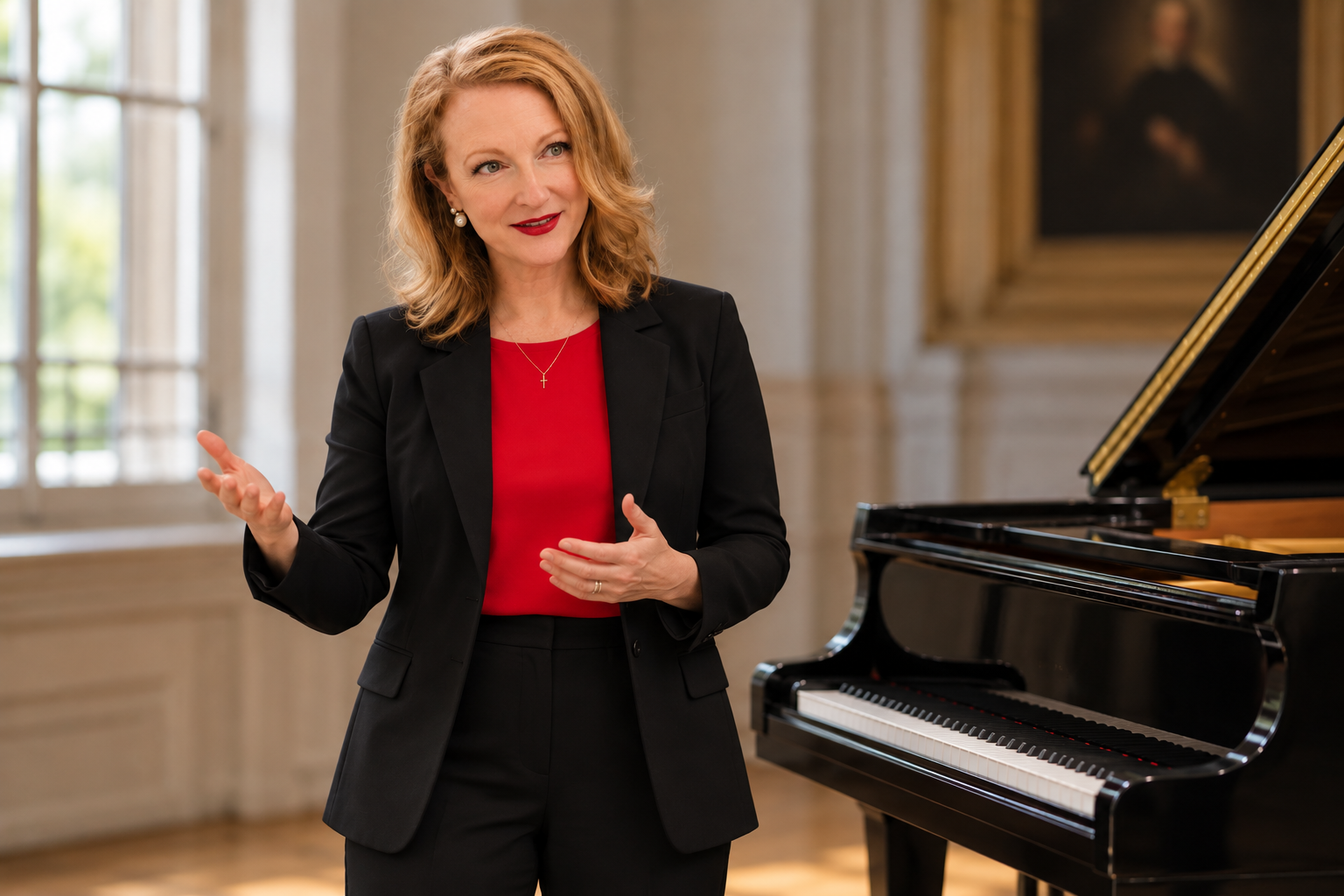
Amy Shortt gesturing beside a grand piano

Who it is for

The Formed Leader partners with organizations seeking to develop leaders beyond knowledge and competency alone. Experiences can be designed for executive teams, leadership cohorts, emerging leaders, university students and professionals, nonprofit and community leaders, and others carrying responsibility in complex human systems.

The work is especially suited to organizations that already invest in leadership development and want to attend more intentionally to the human being beneath the role—to presence, discernment, courage, empathy, imagination, judgment, and the capacity to act wisely.

Why Now?

The age of artificial intelligence is changing how we work. As information becomes increasingly abundant, wisdom becomes increasingly valuable.

Artificial intelligence can accelerate analysis and expand access to knowledge. It cannot cultivate wisdom. The Formed Leader develops the distinctly human capacities that wise leadership requires — attention, discernment, presence, judgment, moral courage, empathy, and imagination.

Human formation is not less important in the age of AI. It is more essential than ever.

The Practice

How formation happens

I

Encounter

A work of music, art, film, story, architecture, nature, or another source of meaning interrupts the ordinary rhythm of work and invites attention.

II

Notice

Before interpretation or explanation, participants attend to what they perceive—what catches their attention, what they feel, and what they might otherwise miss.

III

Reflect

Guided questions turn attention inward. Participants examine what the encounter reveals about how they perceive, respond, decide, relate, and lead.

IV

Integrate

Facilitated dialogue and intentional practice connect insight to lived leadership—bringing what has been noticed into relationship with real questions, tensions, and choices.

V

Become

Formation continues beyond the experience. Participants carry new awareness and practices into the ordinary conditions of their lives and leadership.

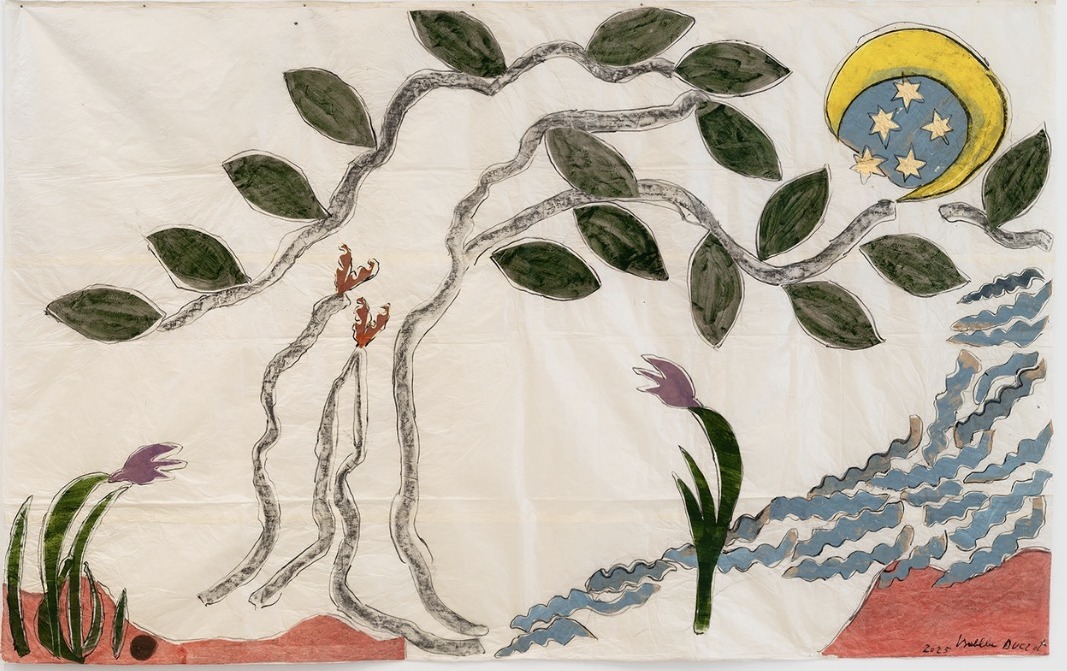
A painted tree beneath a crescent moon and stars

Attention, given generously, is the beginning of wisdom.

Why it is different

  • Leadership development often focuses on what leaders need to know and do.

    The Formed Leader attends to who the leader is becoming.

  • Many programs introduce frameworks and competencies.

    This work creates encounters through which leaders can examine the human being who uses them.

  • Rather than filling every moment with content, formation protects space for attention, reflection, dialogue, and practice.

Outcomes

What organizations can expect

  • Greater attentiveness before action and decision-making.
  • Teams with a shared language for reflection and honest dialogue.
  • Greater capacity for discernment, humility, empathy, and courage amid complexity.
  • Greater presence and steadiness amid sustained pressure and complexity.
  • Intentional practices that continue beyond the experience.

The methodology is grounded in established scholarship across adult development, experiential learning, wisdom studies, and contemplative practice. Organizations that wish to evaluate outcomes formally are welcome to do so; Amy actively supports pilot evaluation and research partnerships.

How We Work Together

  1. 1ConversationWe begin with your organization, your people, and the leadership questions that matter in your context.
  2. 2DesignA Formed Leader Experience is selected, adapted, or developed for your context. Engagements may range from a focused signature session to a half-day, full-day, retreat, or multi-session experience.
  3. 3ExperienceLeaders enter a facilitated encounter designed to create space for attention, reflection, dialogue, and intentional practice.
  4. 4IntegrationThe experience connects back to the realities of leadership, with insights, questions, and practices participants can carry into their work.
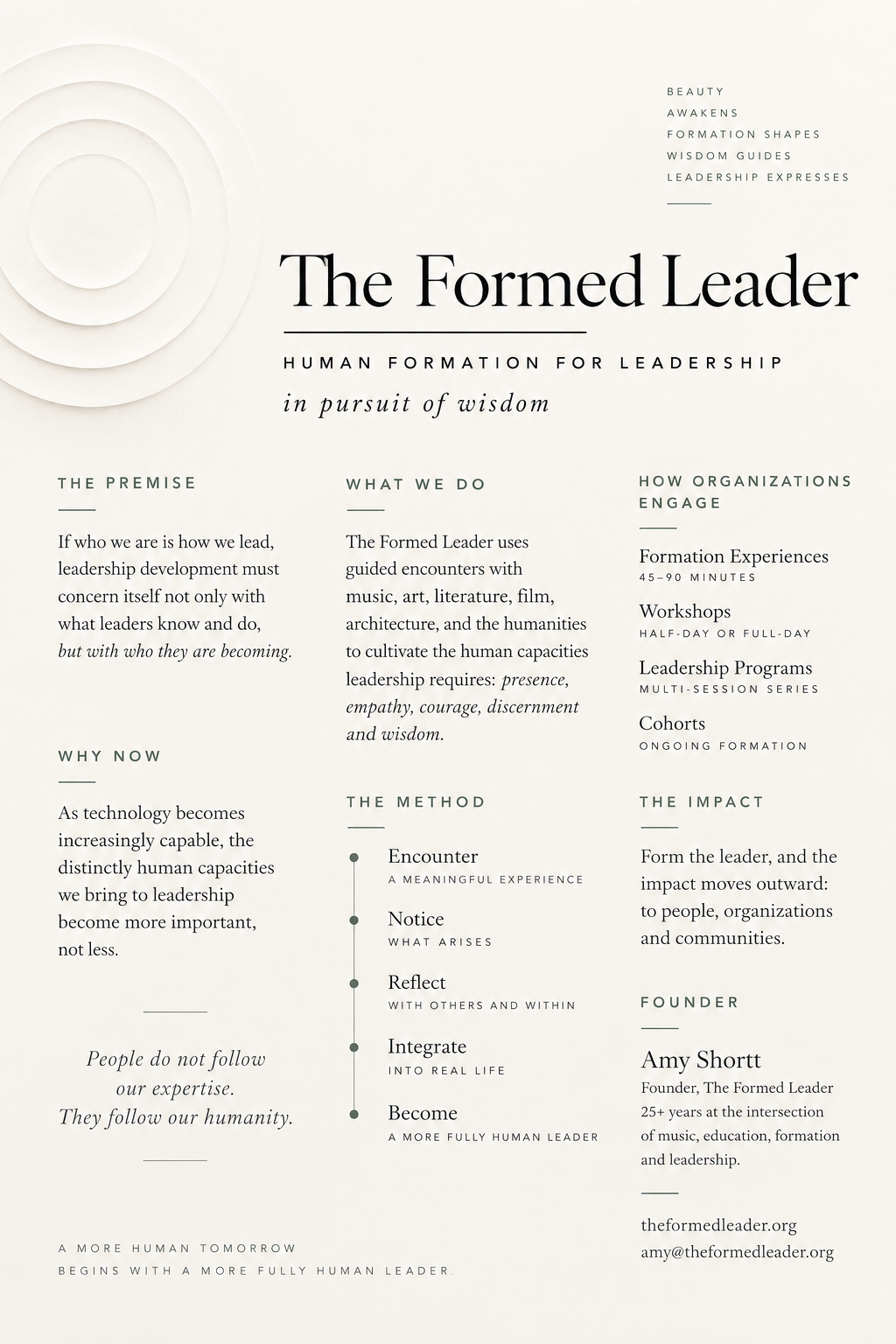
The Formed Leader — Human Formation for Leadership, in pursuit of wisdom. An overview of the premise, what we do, the method, how organizations engage, the impact, and founder Amy Shortt.
Next step

Bring a Formed Leader Experience to your organization.

Tell me about your organization, your people, and what you are hoping to cultivate.