The Formed Leader · In Practice

The Mozart Experience

Attention, Self-Awareness, and the Wisdom of Self-Leadership

October 15, 2026 · Weymouth Center for the Arts & Humanities · Southern Pines, North Carolina

What might Mozart’s music teach us about the way we respond to life’s complexity?

At the historic Weymouth Center for the Arts & Humanities, The Formed Leader invited participants into an immersive experience of music, reflection, and dialogue.

Through Mozart’s Fantasia in D minor, K. 397, participants explored self-awareness, self-leadership, and the space between stimulus and response—discovering how learning to pay attention can open the possibility of wiser choices.

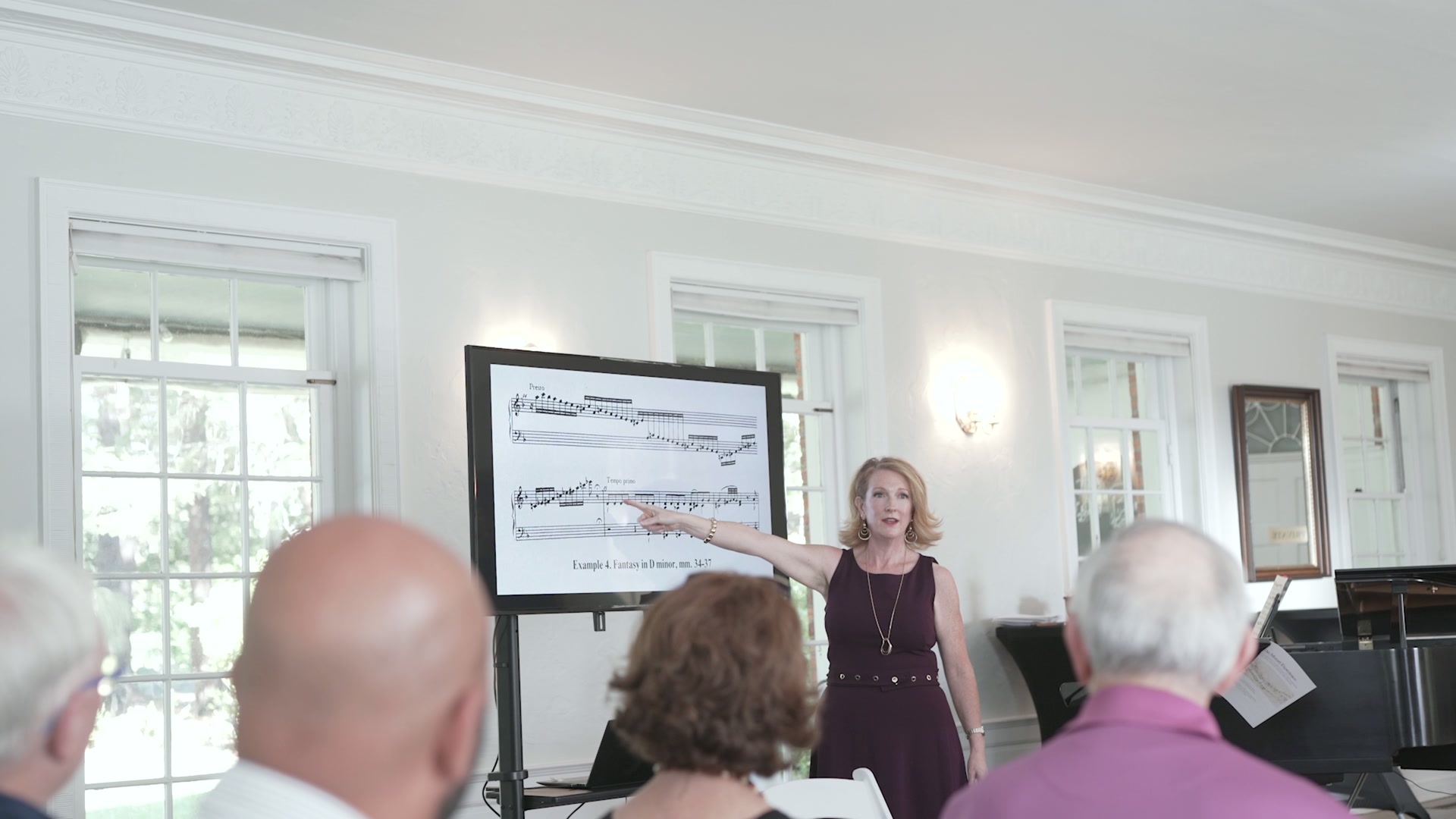
Amy Shortt pointing to Mozart’s music on a screen as participants attend to the score at Weymouth.

The Formed Leader Experience

At Weymouth Center for the Arts & Humanities · 1:30

Amy Shortt guiding participants through a passage of Mozart’s Fantasy in D minor, K. 397.

What if leadership development began not with another framework, but with learning to pay attention?

Amy Shortt, creator of The Formed Leader, led an immersive introduction to a different approach to leadership development—one that attends not only to what leaders know and do, but to who they are becoming.

Through Mozart’s Fantasia in D minor, K. 397, guided reflection, dialogue, and intentional practice, participants explored how the arts and humanities can cultivate attention, self-awareness, and the capacity for self-leadership.

At the heart of the experience was a deceptively simple leadership practice: learning to notice what is happening within us before we respond. By creating greater space between stimulus and response, leaders can move from automatic reaction toward more intentional choice—cultivating the presence, discernment, and wisdom that shape how we live and lead.
The Encounter

The Experience

This was not a lecture about Mozart. It was an interactive formation experience.

Participants listened, noticed, reflected, journaled, and engaged in facilitated dialogue—using a work of art as a way of seeing themselves and their leadership more clearly and integrating insight into intentional practice.

No musical knowledge or experience was necessary.

The Significance

Human Formation for Leadership

The experience explored how attention and self-awareness can cultivate the presence, discernment, and wisdom needed for self-leadership—and how encounters with the arts and humanities can contribute to leadership development by forming the person who exercises leadership.

Its relevance extends to executives, organizational leaders, leadership-development professionals, educators, nonprofit and community leaders, and anyone exploring how to live and lead more wisely.

The Setting

A Fitting Place for an Encounter with the Arts and Humanities

The experience took place at the historic Weymouth Center for the Arts & Humanities in Southern Pines. Once the home of novelist James Boyd and his wife Katharine, Weymouth carries forward a rich tradition of bringing people together around literature, music, ideas, and cultural life.

The setting offered a particularly fitting home for The Mozart Experience: a place shaped by the conviction that encounters with the arts can deepen how we see, understand, and engage the world.

Weymouth Center for the Arts & Humanities

555 E. Connecticut Avenue

Southern Pines, NC 28387

Weymouth Center for the Arts & Humanities, Southern Pines, North Carolina.
From the Day

Photography: Brandi Swarms

Bring a Formed Leader Experience to Your Organization

The Mozart Experience is one example of how The Formed Leader uses encounters with the arts and humanities to cultivate the human capacities that shape wise leadership.

Experiences can be adapted for leadership teams, organizations, professional development programs, and other settings.