Late Light
By Amy Shortt
A Reflection on Darkness, Unforeseen Formation, The Ever-Present Light · November 2026
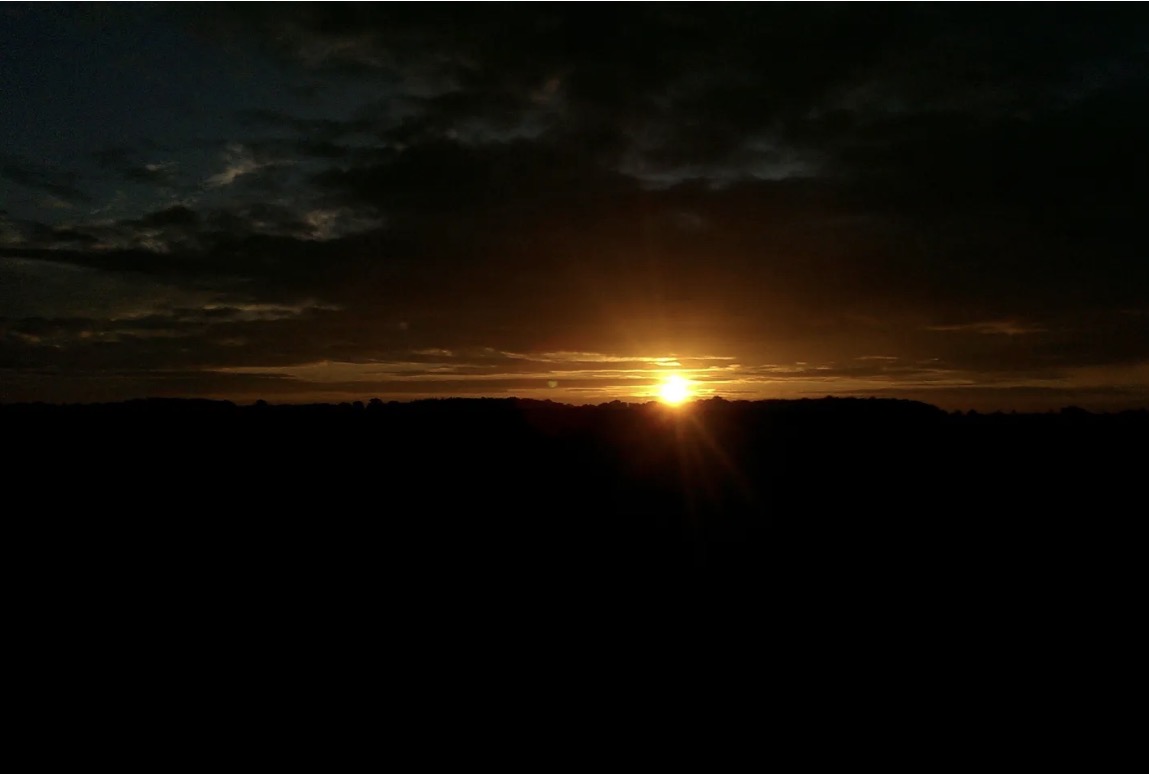
We turned our clocks back an hour, and this evening darkness will seem to arrive suddenly, before we’ve quite finished with the day. But the light has been changing for weeks. The sun has been setting a little earlier each evening, the shadows growing longer, the trees gradually surrendering their leaves. We may not have noticed it happening. Then one evening we reach for a lamp we didn’t need before, look out at the darkening sky, and realize how much has changed.
Autumn has a way of revealing what has been happening all along. The trees have been responding to the shortening days and cooling nights, preparing for winter in ways we cannot always see. What looks like a sudden change is often the visible result of something that began long before we noticed. Even as the landscape grows quieter, there is life beneath the surface.
Consider the acorn.
It has fallen from the tree, perhaps onto a sidewalk or into the grass. Small, brown, and apparently lifeless, it looks like the end of something. We might step over it without giving it another thought.
But the acorn is alive. Some begin putting down roots in autumn, reaching into the cooling soil while nothing appears above ground. Others need the cold of winter before they can begin to grow.
The squirrels gather acorns and bury them, storing food for the winter months. Some of those acorns are never retrieved. Left in the earth, under the right conditions, some take root. Something buried and forgotten may become a mighty oak.
I wonder how much of our own lives unfolds this way, with something taking shape long before we recognize it, before we even know.
We are being formed all the time, by what we meet and what we repeat, by what we love and what we resist, by what we fail to notice. Some of this happens without our awareness. An experience changes the way we see something. A kindness stays with us. Only much later do we recognize how an experience has shaped us.
But being formed is not the same as being awake to it. We can pass through years of experience without ever looking at them. Socrates said that the unexamined life is not worth living. It can sound like a verdict, but it is better heard as an invitation: to look again at what has happened to us, to notice what we keep returning to, and to ask what we are nurturing and what we may need to change.1
Of course, we cannot always choose what happens to us. But we can give some thought to what we allow to take root.
I know something of this from the piano.
There are passages that refuse to cooperate, no matter how carefully I practice them. I slow them down, take them out of context, alternate rhythms, repeat the same measure until I’m certain I should have mastered them. Eventually, I close the piano and walk away.
And when I return the next morning, often something has changed. My hands find their way through what seemed impossible the day before. The music hasn’t become easy, but it has taken hold.
Of course, the practice mattered. So did stepping away. And so does returning, listening again, noticing what I missed before. Sometimes a teacher hears something I cannot, and helps me hear it too. I have sat on the other side of that bench as well, hearing in a student what they could not yet hear in themselves.
Jan Richardson explores something of this mystery in her poem Where the Light Begins.2
Where the Light Begins
Perhaps it does not begin.
Perhaps it is always.
Perhaps it takes
a lifetime
to open our eyes,
to learn to see
what has forever
shimmered in front of us
the luminous line
of the map
in the dark
the vigil flame
in the house
of the heart,
the love
so searing
we cannot keep
from singing,
from crying out
in testimony
and praise.
Perhaps this day
will be the mountain
over which
the dawn breaks.
Perhaps we
will turn our face
toward it,
toward what has been
always.
Perhaps
our eyes
will finally open
in ancient recognition,
willingly dazzled,
illuminated at last.
Perhaps this day
the light begins
in us.
– Jan Richardson, from Circle of Grace, Wanton Gospeller Press
I find myself returning to that thought as the days grow shorter. We speak of the light leaving us, of darkness falling, of waiting for the light to return. And yet the light has not disappeared. Even on the shortest day of the year, the sun rises. The days will begin lengthening again, by mere seconds at first, long before we notice the difference.
John’s Gospel says, “The light shines in the darkness, and the darkness did not overcome it” (John 1:5, NRSV).3
The darkness isn’t denied. John simply assures us that it cannot overcome the light.
Perhaps something similar is true of the light within us. There are seasons when we cannot feel it, when hope seems distant and the way forward is unclear. But we are more than what we can see or feel in any given moment. In a reflection on her poem, Richardson invites us to lean toward the light even in the deepest darkness. Leaning is not the same as making. The light is not ours to produce. It is ours to notice, to turn toward, and to tend.4
And it is ours to share.
American composer Susan LaBarr set Richardson’s poem to music in a beautiful choral work. In her notes accompanying the score, LaBarr reflects on how the poem reminds her of our capacity to work toward peace through ordinary kindness. Peace does not always require monumental actions. The small ways we love, accept, and care for one another can carry light into the world.5
Sometimes another person helps us recognize what we have forgotten: a kindness, a word of encouragement, someone who sees the light in us when we see only darkness in ourselves. And sometimes we can be that light for someone else.
I wonder what becomes possible when we give our attention to these small things: the phone call returned, the name remembered, the chair pulled out for someone who hasn’t yet asked, the voice invited into a conversation, the credit given where it belongs. Not because they erase what is difficult, but because they allow something of that light to become visible in the way we live and lead.
The evenings will continue to grow darker. The trees will lose their last leaves, and winter will settle over the landscape. There will be days when little appears to be growing.
But beneath the fallen leaves, some of those forgotten acorns will be putting down roots.
As the days grow shorter, I want to pay attention to what I am nurturing, to the beauty and grace around me, and to the people whose lives touch mine. Not because attending to these things will make the darkness disappear, but because they remind me that darkness cannot overcome the light.
Perhaps the light we are waiting for does not have to return.
Perhaps we are learning to see the light that is already there.
Listen to Susan LaBarr’s choral setting of Where the Light Begins →
Source notes
- Plato, Apology 38a. The familiar English rendering is “The unexamined life is not worth living.”
- Jan Richardson, “Where the Light Begins,” in Circle of Grace: A Book of Blessings for the Seasons.
- John 1:5, New Revised Standard Version (NRSV).
- Jan Richardson, accompanying reflection on “Where the Light Begins,” published on her Advent Door website.
- Susan LaBarr, “About the Work,” composer’s notes accompanying the published choral score of Where the Light Begins.